
Start with a synthetic pattern.
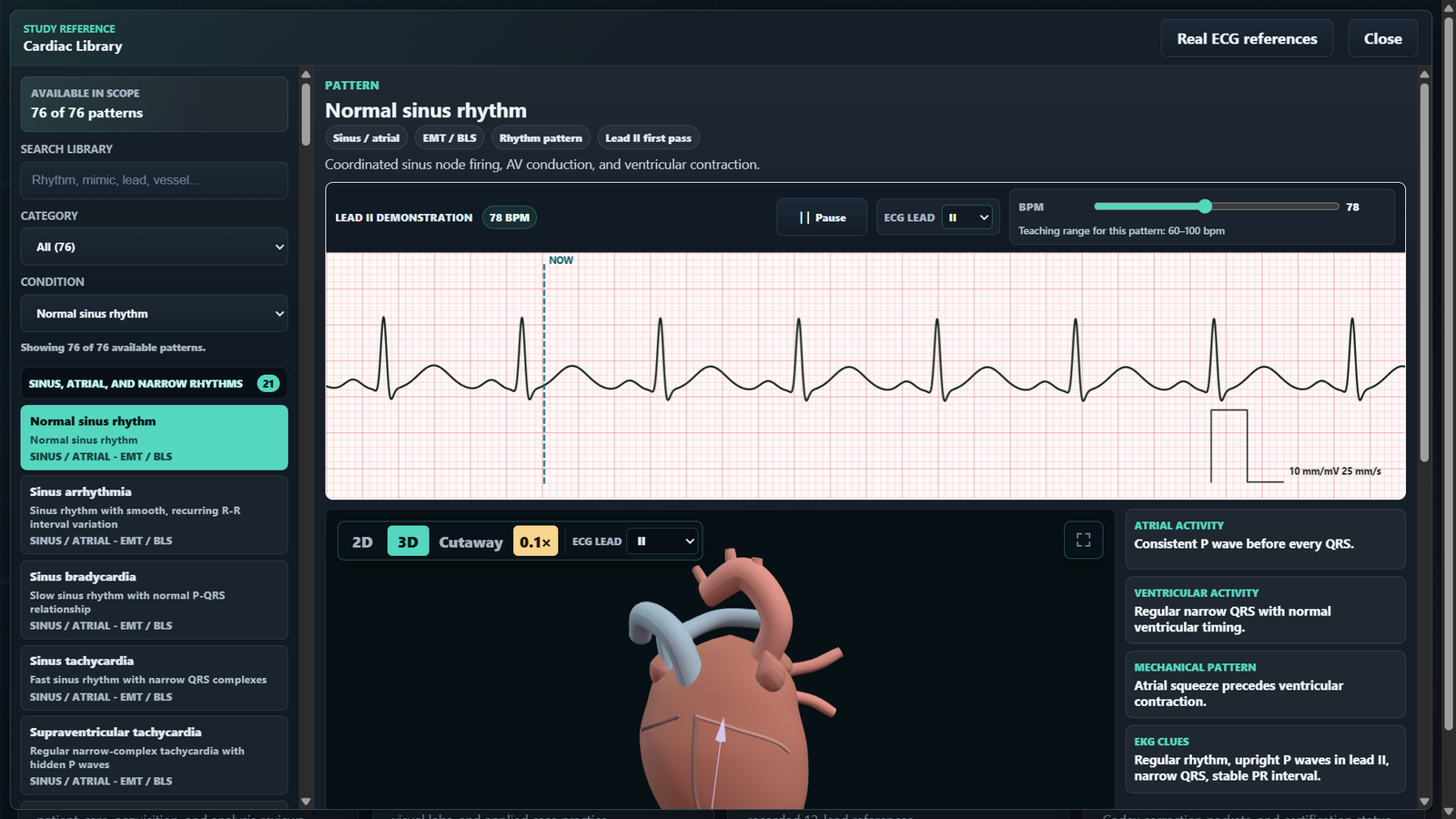
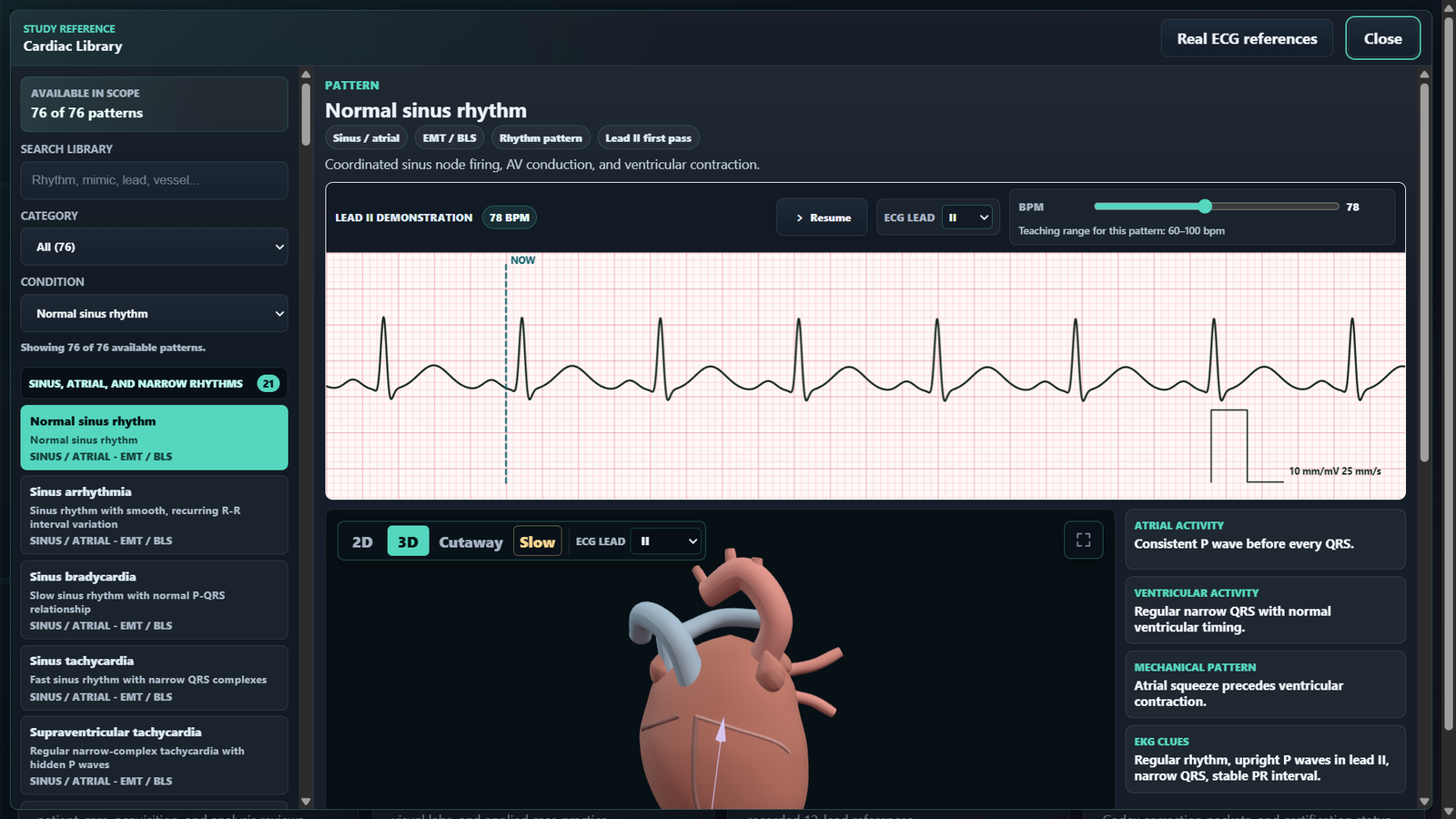
The Library brings together a searchable pattern list, study notes, an idealized strip, and a heart teaching view.
Look for: the selected normal-rhythm example, generated waveform, and visual context.
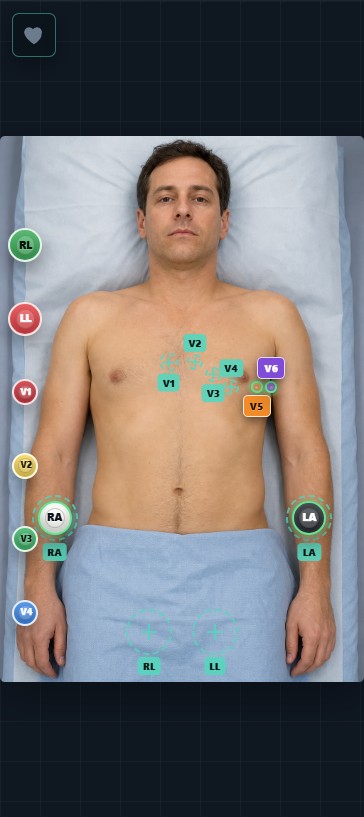
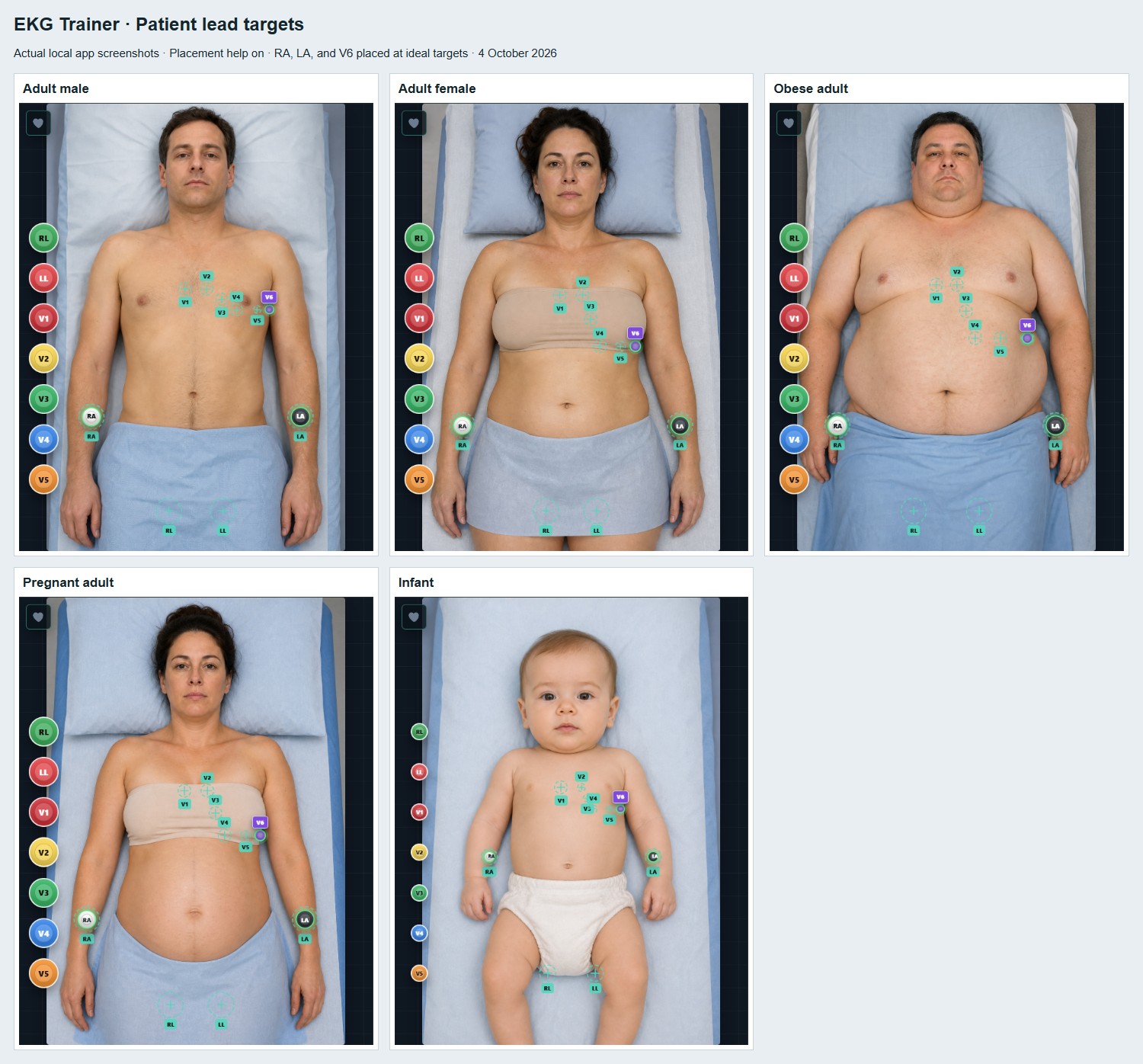
The browser app opens in its own tab. These portfolio images include earlier captures; current placement views appear below.
The browser edition now includes five patient views, clearer electrode-placement guidance, mobile-friendly lead controls, lead-off states, and lead-specific synthetic ECG responses. Open the separate app to explore the interactive workflow.
Place the arm and chest electrodes, then observe how the selected synthetic lead view responds. A disconnected chest electrode is shown as unavailable; moving a chest electrode changes its lead view without changing Lead II.


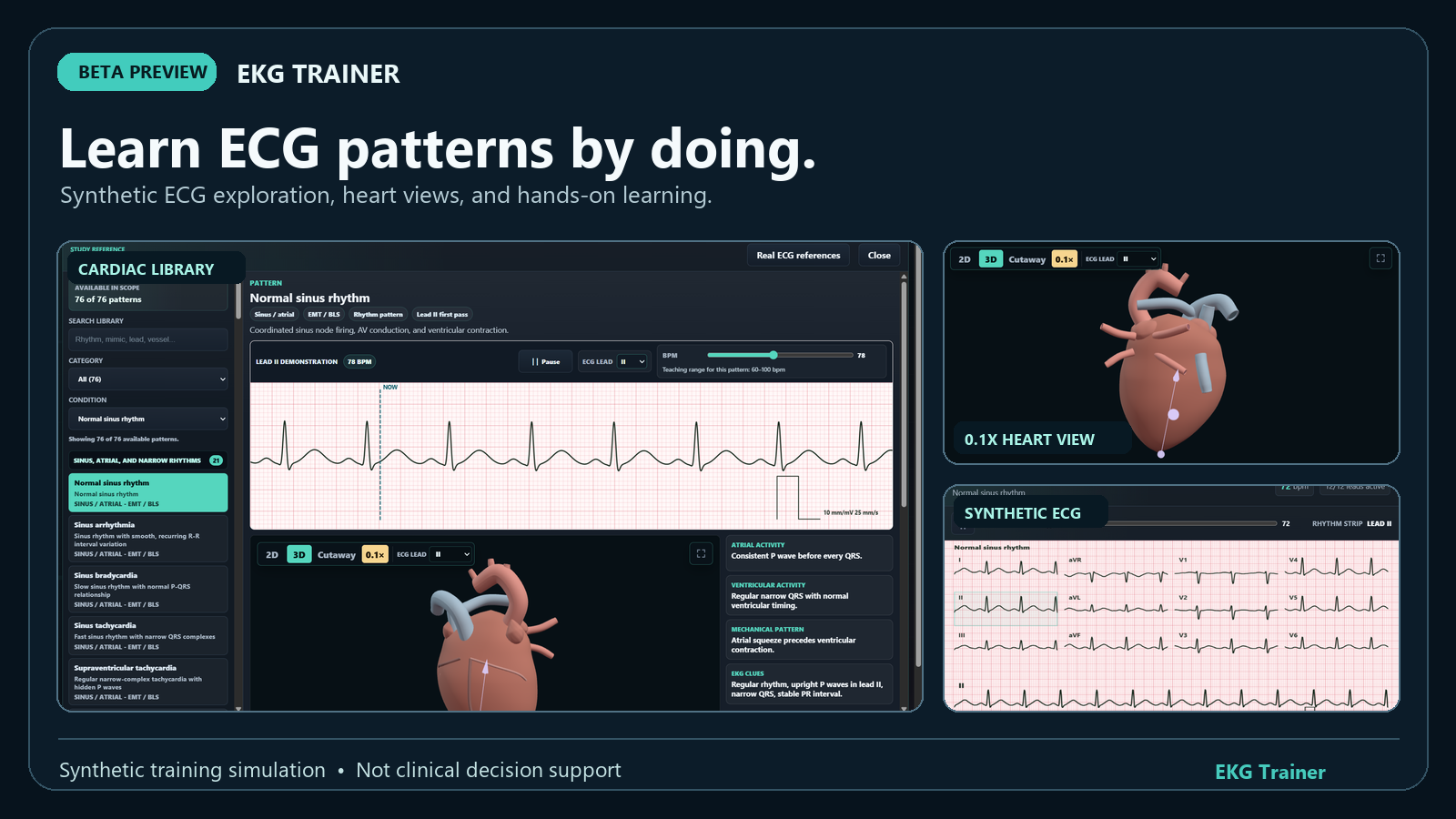
An edited composition of earlier EKG Trainer captures, showing synthetic ECG exploration and heart teaching views. These images predate the current beta work.
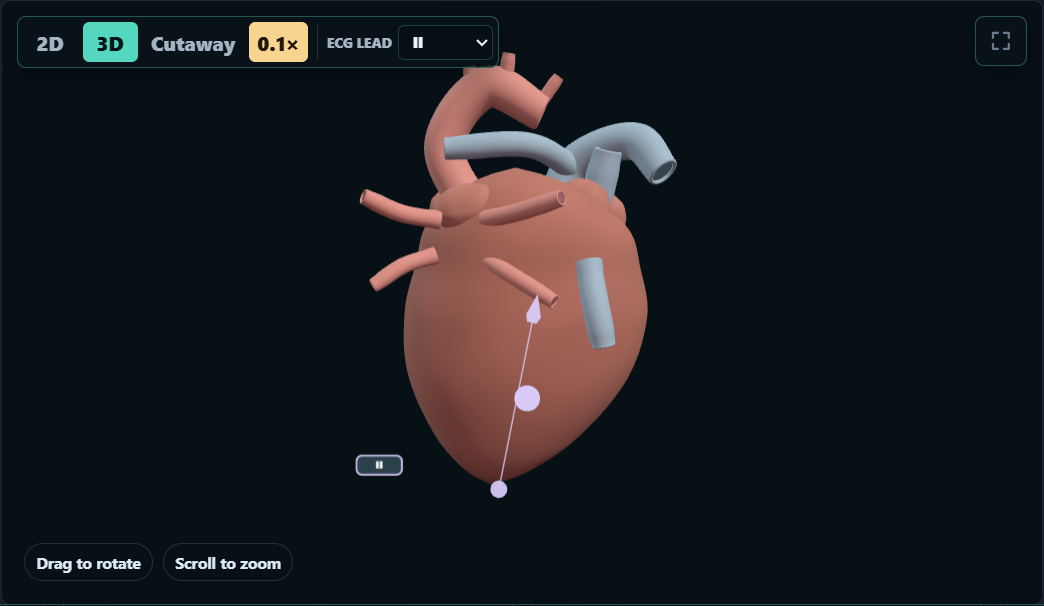
In this earlier normal-rhythm example at 78 BPM, learners can slow visual heart playback to 0.1× while the selected rhythm rate stays the same. These are captures of that app state, not an interactive control on this page or evidence of the current beta checkpoint.
See how the Library, heart playback, and synthetic Skills readout were presented in an earlier app build. Select any image for a closer look.
The Library brings together a searchable pattern list, study notes, an idealized strip, and a heart teaching view.
Look for: the selected normal-rhythm example, generated waveform, and visual context.
The selected 0.1× control changes visual playback speed, giving learners time to inspect the simplified heart view.
Look for: the active slow-motion control and the three-dimensional teaching view.

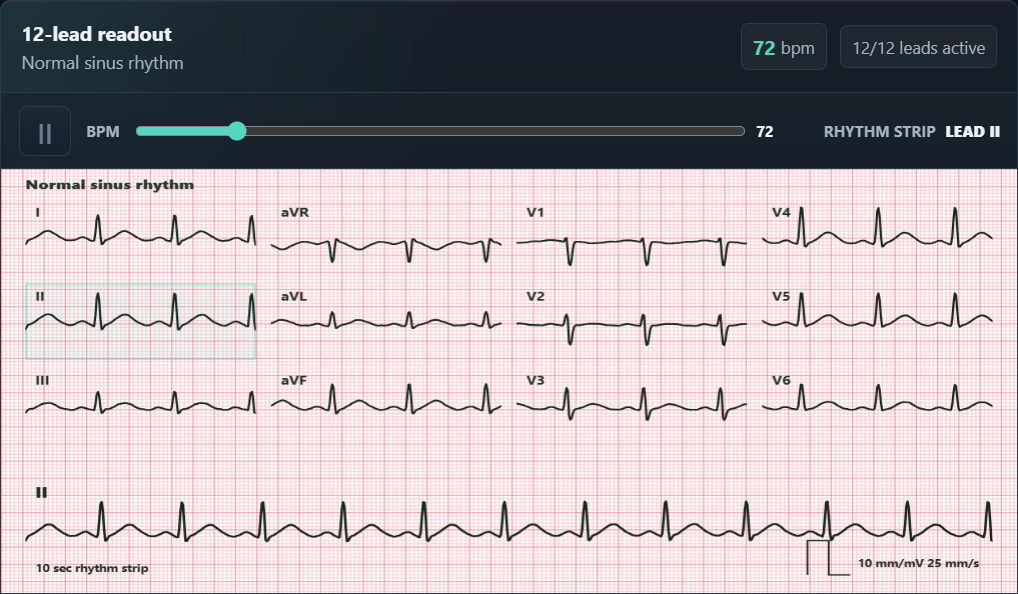
The Skills workspace presents a twelve-lead readout and a longer rhythm strip from a generated training example.
Look for: active simulated leads, the rate control, and the training waveforms.

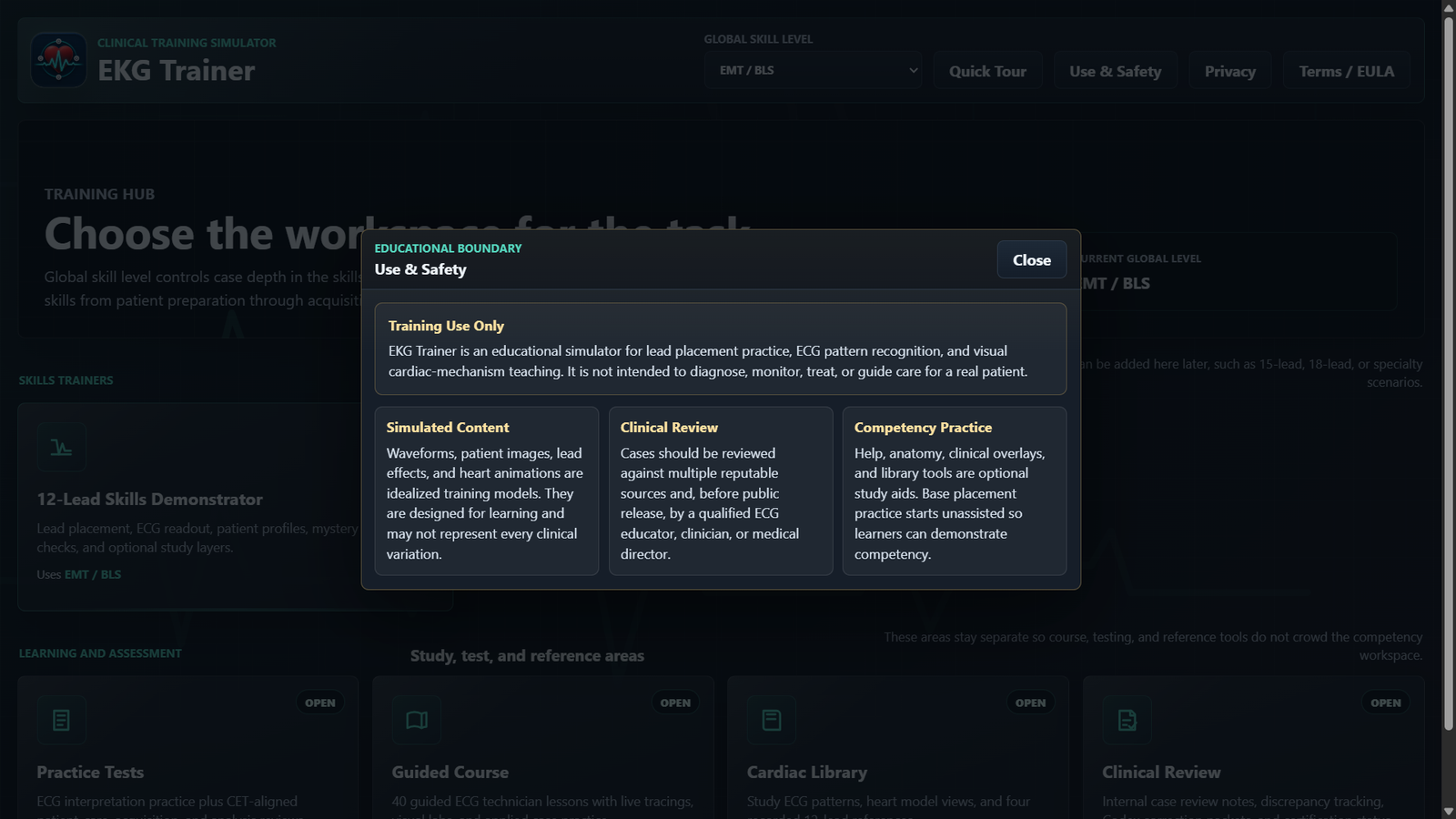
EKG Trainer combines authored examples with selected recorded educational excerpts. It is not intended for real-patient diagnosis, monitoring, or treatment.

The project brings lead-placement practice, authored and recorded rhythm examples, guided lessons, hands-on labs, answer feedback, and simplified anatomy views into one learning environment.
These earlier app screens show a searchable Library, synthetic strip and rate controls, slowed heart playback, and a twelve-lead readout. The current browser app adds guided lessons and placement practice workflows.
This is educational training content, not a calibrated monitor or clinical decision tool. The captured workflows do not establish clinical accuracy or learner outcomes.
The current browser edition brings clearer electrode targets and lead-specific feedback to the placement and Skills workflows. Authored synthetic ECG events also connect with simplified heart-motion timing cues. Clinical content and multi-angle model review remain in progress.
We can discuss the workflow, constraints, and kind of prototype or software that would make it easier to learn or use.